
Finding termite damage can make homeowners assume the entire structure needs treatment, but that is not always the case. The right response depends on where active termites are found, how they are entering, how far the evidence extends, and what parts of the building are affected. In Ohio, subterranean termites often move from soil into structural wood through concealed pathways, which means visible damage may represent only part of the activity.
Our team evaluates termite damage by separating structural repair needs from active termite control. A damaged board may require replacement, but replacing wood alone does not address a colony that is still active below or around the structure. Professional inspection helps determine whether localized treatment, soil treatment, baiting, or a broader treatment plan is appropriate before repairs move forward.
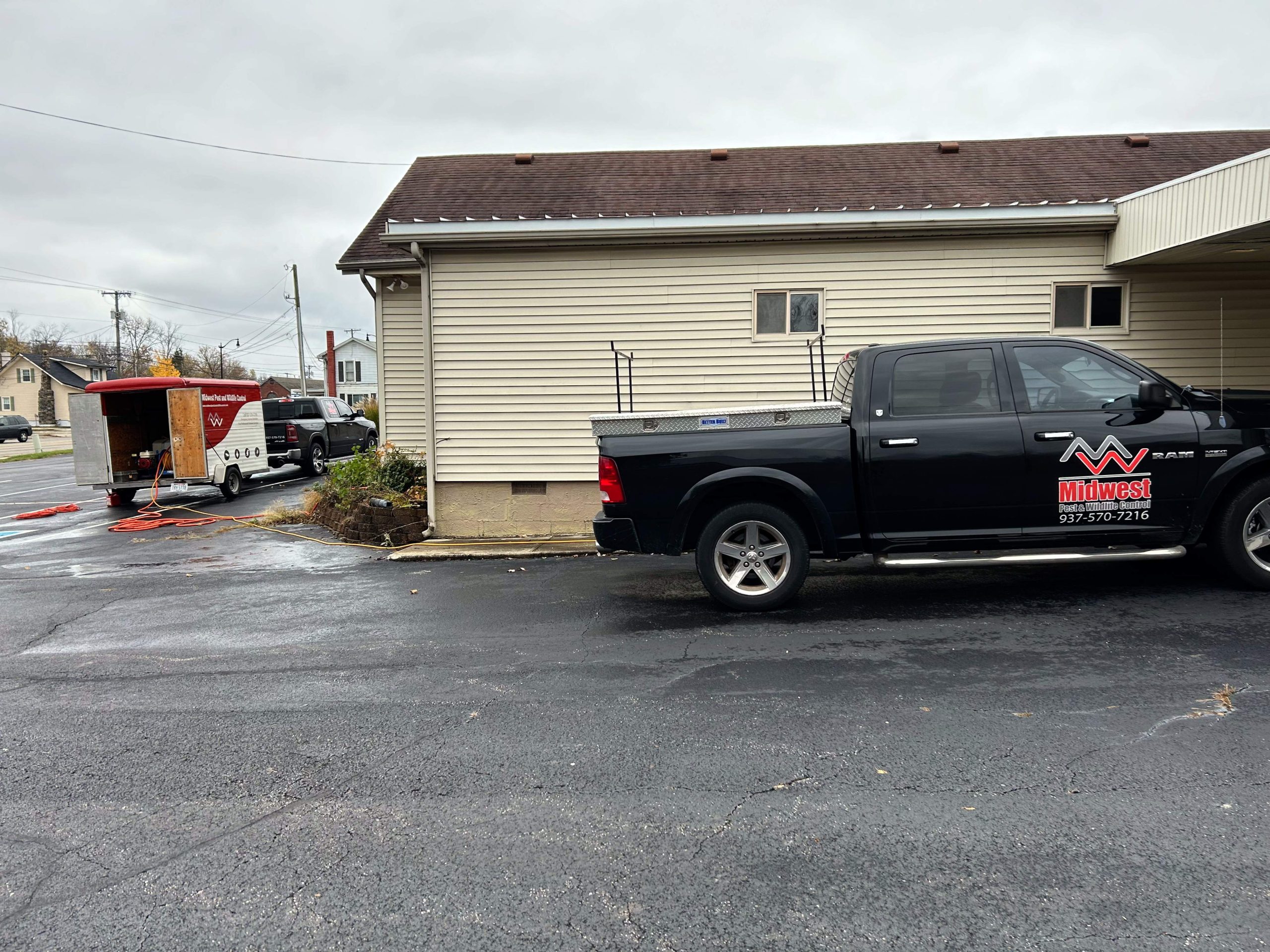
Inspection Comes Before Deciding How Much Treatment Is Needed
Whole-house treatment should not be selected simply because one damaged area looks severe. Our technicians first inspect accessible parts of the property for mud tubes, weakened wood, swarm evidence, moisture, and soil-to-structure access. These clues help show whether activity is limited to one zone or connected to multiple structural areas.
Our article on treatment before repairs explains why termite evidence should be documented before damaged materials are removed. Repair work can cover mud tubes, disturb active pathways, or erase signs technicians need to map the infestation.
A professional evaluation may consider:
- Mud tubes along foundations, crawl spaces, walls, or structural joints
- Hollow-sounding or weakened wood near suspected feeding areas
- Swarmers or shed wings around windows, doors, or interior lights
- Moisture problems near foundations, plumbing, or wooden components
- Cracks and utility penetrations connecting soil with structural areas
- Previous treatment or repair history that may affect current findings
The inspection establishes the treatment area based on evidence rather than appearance alone.
Localized Damage Does Not Always Mean Localized Activity
Termites can feed behind finished surfaces while leaving the exterior of wood relatively intact. That makes it possible for a small visible patch of damage to connect to concealed activity elsewhere. At the same time, old damage does not automatically prove that termites are still active.
This is why treatment decisions depend on more than the size of the damaged section. Our team considers the structure, colony evidence, soil contact, moisture, and accessible pathways before recommending the treatment scope.
Important factors include:
- Whether active mud tubes continue beyond the visibly damaged area
- Whether multiple rooms or structural zones show fresh termite evidence
- How the foundation and soil contact affect possible colony access
- Whether moisture is supporting activity near wood or structural joints
- Whether the property has previous termite treatment records
- Whether concealed areas require additional inspection before repairs begin
In some cases, localized treatment may be appropriate. In others, broader soil treatment, baiting, or another whole-structure strategy may provide better coverage. The correct choice depends on what the inspection confirms.
Long-Term Protection Depends On More Than Replacing Damaged Wood
Repairs restore weakened materials, but they do not remove the conditions that allowed termites to reach the building. Moisture, wood-to-soil contact, foundation access, and nearby colony pressure can remain after damaged trim, framing, or flooring has been replaced.
Our guide to preventive pest care explains why early inspection and ongoing monitoring can reduce the chance that hidden pest activity becomes a larger repair problem. For termites, that means combining treatment with prevention and follow-up.
A long-term plan may include:
- Monitoring previously active areas for fresh tubes or swarm evidence
- Correcting moisture problems near foundations or structural wood
- Keeping foundation edges accessible for future inspection
- Reducing unnecessary wood-to-soil contact where possible
- Rechecking repaired areas after treatment and construction are complete
- Scheduling follow-up when property conditions remain favorable for termites
This broader approach helps protect the repair investment instead of treating damaged wood as an isolated construction issue.
Repair work can also reveal information that was hidden during the first inspection. Once treatment planning is complete and damaged materials are carefully removed, contractors may uncover galleries, concealed moisture, or additional weakened wood. Those findings should be shared with the pest professional so the treatment record and follow-up plan can be updated.
The key question is therefore not whether termite damage looks serious enough to justify whole-house treatment. The better question is how extensive the active infestation is and what treatment method best matches the structure. Some homes may need targeted treatment in limited areas, while others may require broader measures because activity is connected through soil, foundation zones, or multiple structural sections.
Termite treatment can also vary with construction type. Slab foundations, crawl spaces, porches, garages, and additions may create different access points that affect coverage.
Professional inspection keeps that decision evidence-based. It also helps determine when repair work can safely proceed, which areas need continued monitoring, and whether prevention measures should be added after treatment.
Let The Evidence Define The Treatment
If you have found mud tubes, swarmers, weakened wood, or suspected termite damage, contact Midwest Pest and Wildlife Control for professional termite inspection, treatment planning, and long-term prevention.