
Waking up with itchy red marks can immediately raise concerns about bed bugs, but bites alone are not enough to confirm an infestation. Mosquitoes, fleas, mites, and skin irritation can create marks that look similar, and people can react differently to the same insect. Some bed bug bites become raised and itchy, while others cause little or no visible reaction.
Reliable bed bug control starts by looking beyond the skin. Bed bugs leave physical evidence in sleeping areas, furniture, and nearby cracks. The strongest diagnosis comes from combining bite patterns with signs such as spotting, shed skins, eggs, and live insects.
Bite Patterns Can Offer Clues, But They Are Not Proof
Bed bug bites often appear on skin that remains exposed during sleep, including the arms, shoulders, neck, face, and legs. Some people notice several marks grouped together or arranged in a loose line. However, that pattern is not unique to bed bugs, so appearance alone can be misleading.
Clues that may justify a closer inspection include:
- Bites appearing after sleeping in the same room for several nights
- Clusters or lines of itchy marks on exposed areas of skin
- New marks developing overnight without an obvious daytime cause
- Multiple household members noticing unexplained bites after using the same room
- Skin reactions occurring alongside spotting or other evidence near the bed
Fleas may also produce clustered bites, especially around the ankles and lower legs, while mosquitoes can cause isolated welts. Medical conditions and contact irritation can resemble insect bites as well.
When bed bugs are suspected, focus on the environment instead of trying to identify the pest from a welt. Learning about bed bug warning signs can help put bite patterns in context with the evidence professionals look for during an inspection.
The Bed And Nearby Furniture Usually Provide Better Evidence
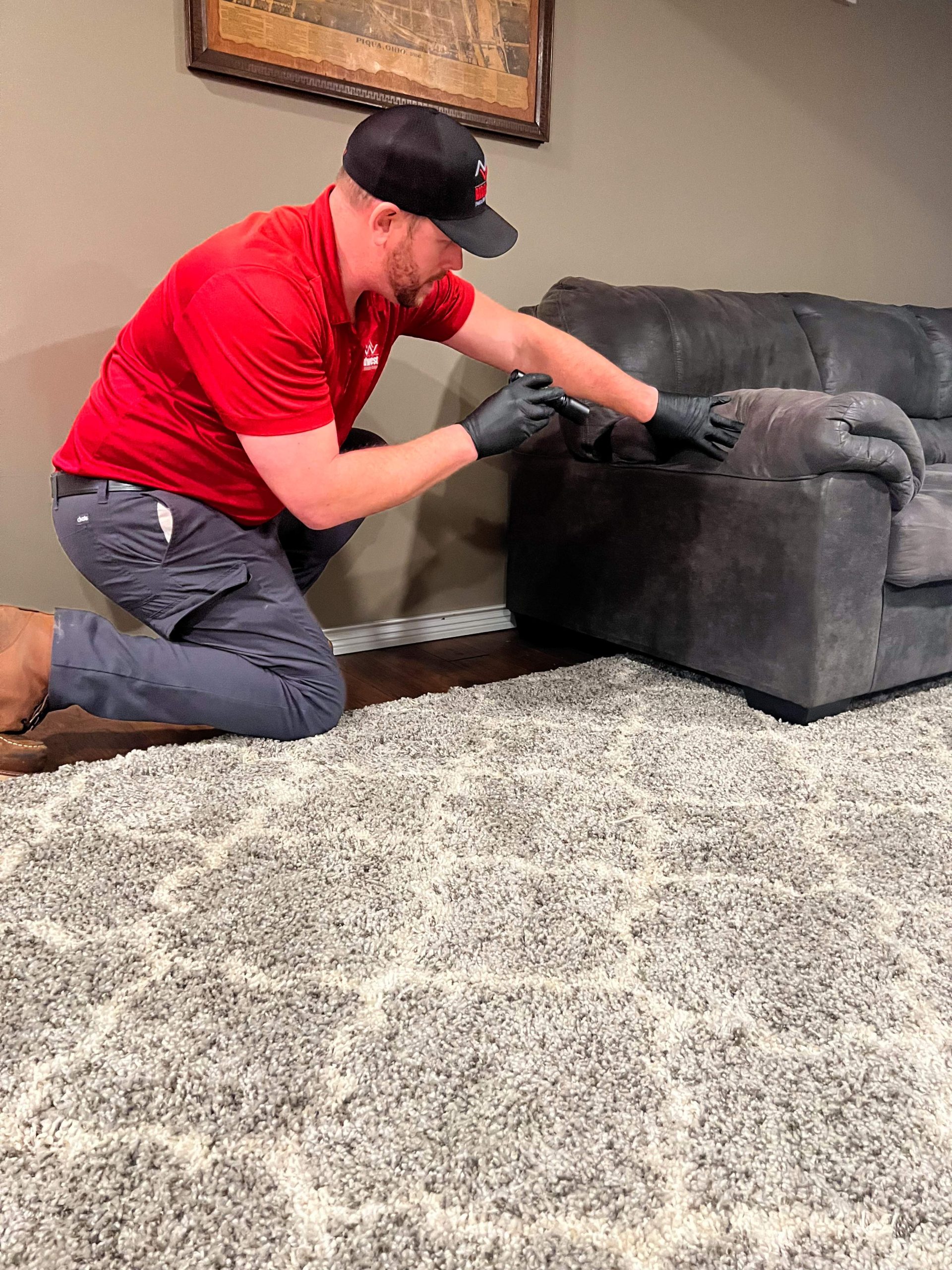
Bed bugs hide close to where people rest because they feed at night. Mattress seams are important inspection areas, but activity can also occur in box springs, bed frames, upholstered furniture, trim, and narrow furniture joints. An established infestation may spread beyond the immediate sleeping surface.
Look for physical signs such as:
- Small dark spots on mattresses, bedding, frames, or nearby furniture
- Pale shed skins left behind as immature bed bugs grow
- Tiny whitish eggs or eggshells tucked into seams and cracks
- Rust-colored stains caused by crushed insects or feeding activity
- Live bed bugs hiding along seams, joints, headboards, or baseboards
Adult bed bugs are small, flat, and capable of squeezing into narrow spaces. That hiding ability is one reason infestations may become established before anyone sees an insect directly.
Professional inspectors look at the room as a connected environment. They examine where people sleep, how furniture is arranged, and whether activity has reached nearby cracks or adjoining areas.
Why Professional Confirmation Matters Before Treatment
Misidentifying bed bugs can lead to unnecessary treatment or make a true infestation harder to control if ineffective products disturb bed bugs and cause them to scatter into new hiding places.
Professional evaluation is useful because it can:
- Confirm whether the evidence actually matches bed bug activity
- Determine which rooms or furniture pieces show signs of infestation
- Locate concealed harborages that are easy to miss during a quick visual check
- Distinguish bed bugs from fleas, mites, or other pests when evidence overlaps
- Build a treatment plan around infestation size, room layout, and affected areas
This matters because serious infestations rarely respond well to trial-and-error methods. Guidance on serious infestation risks shows why incomplete treatment can leave hidden insects and eggs behind.
Bed bugs also have a life cycle that complicates control. Eggs may remain protected in cracks while adults and nymphs occupy different harborages. A room can appear quieter for a short period even though surviving insects are still present. Follow-up inspection helps determine whether activity is actually declining.
Bite appearance should therefore be treated as a starting point, not a diagnosis. If unexplained marks continue, inspect for physical evidence around sleeping and resting areas and consider whether the pattern is recurring. The combination of bites, dark spotting, shed skins, eggs, or live insects provides a much stronger reason to suspect bed bugs.
It is also important to remember that some people show little reaction to bed bug bites. One person in a household may develop itchy welts while another appears unaffected, even when both are sleeping in the same infested room. That difference can delay recognition and make environmental evidence even more important.
Professional bed bug control provides the clearest path when signs are uncertain or recurring. Accurate identification helps avoid treating the wrong pest, while a thorough inspection shows how far activity has spread. Once the extent is understood, treatment and follow-up can be matched to the actual infestation rather than based on assumptions from bite marks alone.
Let The Evidence Settle The Question
If unexplained bites keep appearing and you suspect bed bugs, contact Midwest Pest and Wildlife Control for professional inspection, bed bug control, and treatment based on confirmed activity.